Trying to decide between a condo and a townhome in Fayetteville? You’re not alone. With downtown energy and campus convenience, attached homes can be a smart move if you want location and lower upkeep. In this guide, you’ll learn how ownership, HOA rules, maintenance, insurance, financing, and resale differ here in Fayetteville so you can pick the right fit. Let’s dive in.
Condo vs townhome basics
What you actually own
- Condos: You own the interior of your unit and a shared interest in common elements like the roof, exterior, landscaping, parking, and amenities. Your unit boundary typically stops at the interior walls, ceiling, and floor.
- Townhomes: Often fee-simple, meaning you own the dwelling and the land it sits on, including the exterior and roof. Some townhomes, however, use a condo-style structure that shares ownership of exteriors and grounds. Always confirm the legal description and CC&Rs.
How each is governed
- Condos: A homeowners or condominium association manages common areas, enforces rules, and collects dues.
- Townhomes: May have an HOA or POA that maintains shared areas like streets and landscaping, or very limited governance. Responsibilities vary by community documents.
Typical layouts and features
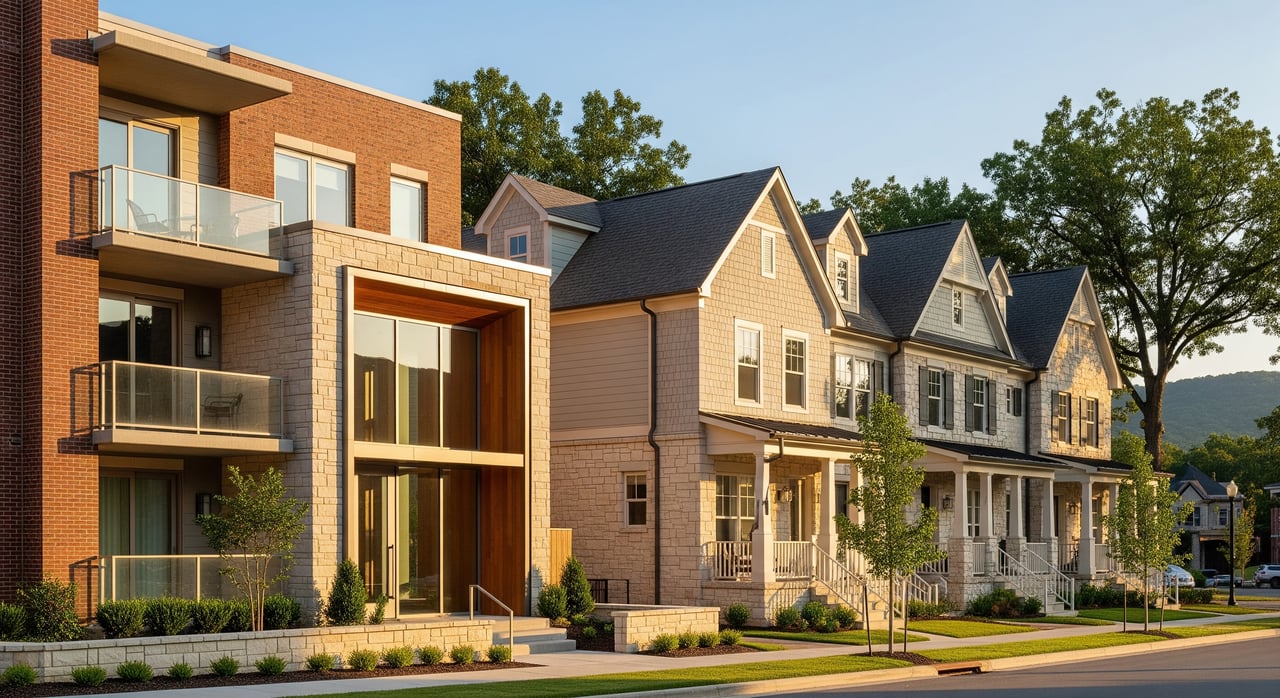
- Condos: Multi-unit buildings with shared walls and possible amenities like a pool or gym. You may see elevators in some buildings.
- Townhomes: Multi-story attached homes with private entries, garages, and sometimes small yards or patios.
Fayetteville locations and lifestyle fit
Downtown and Dickson Street
Downtown, Dickson Street, and nearby historic districts offer high walkability with restaurants, arts venues, and nightlife. Smaller, low-maintenance condo buildings are common and appeal to young professionals, empty nesters, and investors who value proximity and convenience.
Campus-adjacent neighborhoods
Areas near the University of Arkansas see strong rental demand from students and staff, with seasonal turnover. Investors often target these locations for consistent occupancy potential, while owner-occupants should weigh noise, parking, and turnover patterns against the convenience of a short commute.
Parking, noise, and walkability tradeoffs
Walkable locations command a premium for proximity to restaurants, events, and campus. Near-campus buildings may have higher turnover and different tolerance for noise and parking pressure. In any attached home, evaluate soundproofing, guest parking, and access before you buy.
HOA, maintenance, and monthly costs
What dues usually cover
- Condos: Dues commonly include exterior maintenance, roof, common areas, and sometimes utilities up to the unit’s meter. Ask exactly what services are included.
- Townhomes: Many fee-simple townhomes have lower dues that focus on shared landscaping or private streets. Some townhome projects shift more exterior care to the association. Read the CC&Rs to know what you are paying for.
Key tip: Review the HOA budget, current balance sheet, and reserve study if available. Underfunded reserves can lead to special assessments.
Who handles maintenance
- Condos: The HOA typically maintains exterior elements and shared systems. You maintain interior finishes and systems inside your unit. Confirm the unit boundary in the documents.
- Townhomes: Owners are often responsible for the roof and exterior, similar to a single-family home. Some communities cover more. Verify responsibilities before you offer.
Insurance differences you should know
- Condos: The association carries a master policy for common areas and often the exterior shell. You carry an HO-6 policy for interior, personal property, liability, and loss-assessment coverage.
- Townhomes: If fee-simple, you usually carry an HO-3 policy that covers exterior and interior unless the association’s master policy extends to certain exterior components. Confirm deductibles, what the master policy covers, and whether you need loss-assessment protection.
Financing and resale realities
Financing approvals and investor ratios
Lenders look at project factors for condos, including owner-occupancy ratios, budget health, and litigation. Some mortgage programs have condo project approval requirements. Fee-simple townhomes are often underwritten like single-family homes. High investor or delinquency rates in an association can affect loan eligibility and interest rates.
Resale drivers in Fayetteville
Resale strength depends on location, HOA financial health, parking, building condition, and rental restrictions. In downtown and campus-adjacent areas, walkability and proximity to events can lift demand. Associations with solid reserves and a light history of special assessments tend to appeal to a wider buyer pool.
Short-term rentals and local checks
If you plan to rent short-term, confirm city rules, permit requirements, and HOA restrictions before you buy. Also review floodplain status, hillside or drainage constraints, and any historic district considerations that may affect renovations.
Who should pick what? Scenarios
- Young professional or grad student near nightlife: A condo near downtown or Dickson Street can offer low maintenance and strong walkability. Prioritize parking availability, building security, and HOA rules on guests and rentals.
- University faculty or staff: A townhome or condo near campus can work. Choose a townhome if you want a private entry and garage, or a condo if you prefer minimal exterior upkeep.
- Investor targeting student renters: Consider small condos or multi-bedroom townhomes close to campus. Verify rental policies, lease minimums, parking arrangements, and plan for turnover and maintenance.
- Downsizer: A condo with elevator access and robust HOA reserves can simplify upkeep while keeping you close to amenities.
- Family seeking space and a little yard: A townhome may be a better fit if you want a garage and limited yard without full single-family upkeep. Verify parking and community rules.
Due diligence checklist for Fayetteville buyers
- Obtain and read: CC&Rs, bylaws, HOA budget, reserve study if available, insurance certificates, meeting minutes for the past 12–24 months, and rules on rentals and pets.
- Ask the HOA or manager:
- Current monthly dues and what they include
- Recent or planned special assessments
- Reserve fund balance and funding plan
- Owner-occupancy and rental percentages
- Any pending or recent litigation
- Maintenance responsibility for roof, exterior, HVAC, and utilities
- Physical checks:
- Unit boundaries and what you control vs association
- Roof age and building envelope condition
- Parking assignment and guest parking
- Noise and sound transfer through shared walls
- Accessibility and elevator, if applicable
- Lender and insurance checks:
- Condo project eligibility for your loan type if applicable
- Insurance quotes: HO-6 for condos, HO-3 for townhomes, and loss-assessment coverage
- Local checks:
- FEMA flood map status for the property
- Property tax info with Washington County Assessor
- City items that could affect use, including parking or short-term rental permits
Pros and cons at a glance
Condos
- Pros:
- Lower exterior maintenance handled by the association
- Walkable locations near downtown and campus
- Potential access to amenities like a pool or gym
- Cons:
- HOA dues can be higher and impact monthly cost
- Financing can depend on project approval and investor ratios
- Association rules may limit rentals or renovations
Townhomes
- Pros:
- Private entry, garage, and sometimes a small yard
- Often treated like single-family for financing if fee-simple
- More control over exterior in many communities
- Cons:
- You may be responsible for the roof and exterior upkeep
- HOA may still restrict certain uses or exterior changes
- Fewer building amenities compared to some condos
The bottom line for Fayetteville buyers
If you want low maintenance and top-tier walkability near Dickson Street or campus, a condo can be a great match, provided the HOA’s finances and rules align with your goals. If you want a private entry, garage, and a bit of outdoor space with manageable upkeep, a townhome often fits better. In both cases, your smartest move is a careful review of the CC&Rs, budget and reserves, insurance coverage, and lending eligibility before you write an offer.
If you’d like help comparing specific Fayetteville buildings and communities, reach out to schedule a consult with Aaron Ork. You’ll get local context and a clear, data-informed plan for your next move.
FAQs
What is the key ownership difference between condos and townhomes in Fayetteville?
- Condos typically include ownership of the interior plus shared common areas, while many townhomes are fee-simple and include the structure and land; always verify documents.
How do HOA dues impact monthly costs for condos vs townhomes near campus?
- Condos may have higher dues that cover exterior and amenities; some townhomes have lower dues but more owner maintenance. Compare total monthly cost, not just the mortgage.
What insurance policies should Fayetteville buyers expect for each type?
- Condo owners usually carry HO-6 policies for interiors and loss assessments; fee-simple townhome owners generally carry HO-3 policies that cover interior and exterior.
How does financing differ for condos compared to fee-simple townhomes?
- Some loan programs require condo project reviews and look at investor ratios and budgets; fee-simple townhomes are often underwritten like single-family homes.
What should investors know about student rentals near the University of Arkansas?
- Verify rental rules, lease minimums, parking, and turnover costs. Seasonal demand can be strong, but wear and tear and management needs are higher.
Who handles roof repairs in Fayetteville condos and townhomes?
- In most condos, the HOA handles roof repairs; in many townhomes, the owner is responsible. Confirm maintenance responsibilities in the CC&Rs.