Wondering which part of Fayetteville fits the way you actually want to live? That is a smart question, because Fayetteville offers more than one kind of neighborhood experience, from walkable in-town areas with older homes to newer growth corridors built around driving convenience. If you are trying to sort through trade-offs like yard size, home age, maintenance, and access to parks or trails, this guide will help you compare your options with more clarity. Let’s dive in.
Fayetteville's Housing Picture
Fayetteville continues to grow, with a 2024 population estimate of 103,134. That is up 9.4% from the 2020 census count of 93,949, which helps explain why many buyers feel pressure to make smart, informed choices about location and housing type.
The city also reports that its housing mix has not diversified quickly enough to match the needs of smaller households, prime-age workers, seniors, and students. In 2024, about 70% of households were made up of one or two people, yet only 17% of occupied housing units were studios or one-bedroom homes.
That mismatch matters when you start comparing neighborhoods. Citywide, detached single-family homes still make up the largest share of residential properties, so if you want an attached home, townhome, or other lower-maintenance option, you may need to search more selectively.
Historic In-Town Neighborhoods
If you want central location, older architecture, and easier access to parks or daily errands, Fayetteville's in-town neighborhoods deserve a close look. These areas often appeal to buyers who care more about proximity and character than a large lot or newer floor plan.
The city highlights downtown as a place shaped around walkability, downtown living, and access to services. That makes it one of the clearest examples of a neighborhood type where convenience and connectedness may matter more than yard space.
Fayetteville also has 11 historic districts listed on the National Register of Historic Places. The city's historic preservation materials point to recognizable areas such as Dickson Street, Mount Nord, Washington-Willow, and Wilson Park when talking about older homes, central locations, and established neighborhood character.
What Buyers Often Like Here
Older in-town areas can offer a feel that is hard to duplicate in newer subdivisions. You may find:
- Smaller lots with more central locations
- Older architecture and established streetscapes
- Easier access to downtown services
- Close proximity to parks and trails
- More opportunities to walk or bike for some daily needs
What to Watch Closely
These neighborhoods also come with trade-offs. Older homes and compact lots can mean different maintenance needs, less storage, or less separation between homes than you might see in newer developments.
If a home is located in a historic district, it is also worth confirming what type of district it is. The city notes that National Register districts do not place obligations on private owners, while local ordinance districts can regulate character and integrity.
Parksdale and Similar Core Areas
Parksdale is a useful example of the older in-town housing stock found in Fayetteville. The city says homes there were developed between the 1920s and 1960s and are primarily small, one-story residences.
For many buyers, that means a practical middle ground between downtown-adjacent convenience and a quieter residential setting. You may not get the same square footage or lot size found in newer areas, but you can gain quick access to recreation and established surroundings.
The city also notes direct links from Parksdale to Greathouse Springs Park and Town Branch Trail. Nearby, Wilson Park offers gardens, a pool, and its well-known castle, while Walker Park adds a splash pad, skate park, courts, and access to the Razorback Greenway.
Why This Matters for Buyers
When you compare neighborhoods, lifestyle often goes beyond the house itself. In areas like Parksdale and nearby core neighborhoods, access to trails, parks, and city-center amenities can play a big role in your daily routine.
You should also be aware of infill considerations. The city notes that Parksdale's zoning can allow duplexes and multifamily buildings that may be out of scale with its smaller one-story homes, which is a reminder to look beyond the listing and study the surrounding block.
Newer Neighborhoods and Growth Corridors
If your priority is newer construction, a more suburban street pattern, or straightforward driving access, newer neighborhood areas may be a better fit. In Fayetteville, the Wedington corridor is one of the clearest examples of this type of growth.
The city's corridor plan says Wedington has seen significant commercial development, and that large single-family neighborhoods were built north and south of Wedington Drive over the last decade. That pattern often appeals to buyers who want newer home features and a more familiar subdivision layout.
These areas can offer a different kind of convenience. Instead of central walkability, the trade-off is often newer construction, easier car access, and a neighborhood design that feels more suburban than urban.
What Buyers Often Like Here
In newer single-family areas, you may be more likely to find:
- Newer construction or more recent updates
- Larger concentrations of detached homes
- More garage-forward and subdivision-style layouts
- Simpler driving routes for daily errands
- A more car-oriented neighborhood pattern
The Main Trade-Off
The city describes Wedington as a five-lane arterial with high traffic volumes and speeds. So while these areas may work well for buyers who value driving access and newer inventory, they may feel less walkable than the historic core.
That does not make one option better than another. It simply means your best neighborhood fit depends on whether you care more about centrality and walkability or newer housing and a suburban layout.
Townhomes and Low-Maintenance Options
Some buyers want less yard work, less exterior upkeep, or a more compact home style. In Fayetteville, those options exist, but they are still a smaller part of the overall housing mix.
The city's housing analysis breaks the stock down as 51% detached single-family homes and 5% attached single-family homes, with the rest spread across small multifamily and larger apartment structures. That means townhomes, attached homes, and similar options are present, but they are more likely to appear in pockets rather than dominate a whole section of the city.
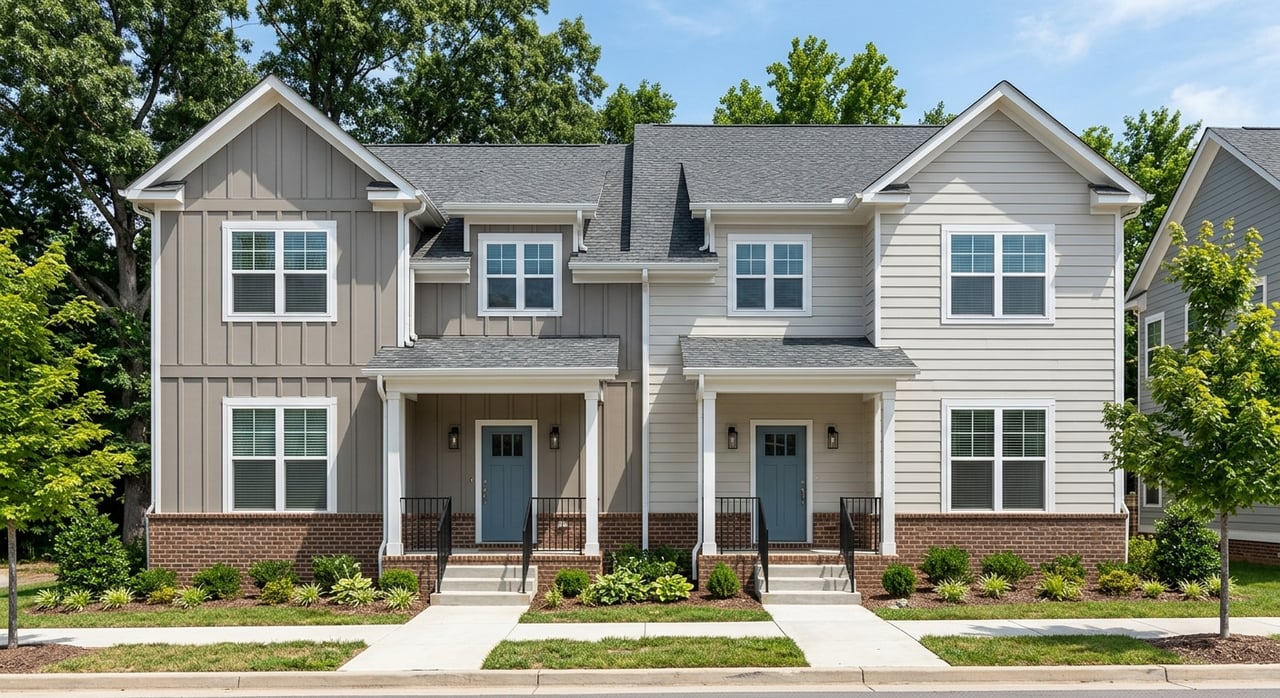
The same city analysis says newer construction has started to add townhomes, duplexes, and accessory dwelling units. For buyers, that means low-maintenance choices may be available in both newer projects and some older in-town settings, but the feel can vary a lot from one location to another.
Common Trade-Offs in Attached Housing
If you are comparing a townhome, condo-style home, or another compact option, think through these factors:
- Less yard work and exterior maintenance
- Shared walls in some properties
- Shared parking or tighter parking layouts
- More emphasis on convenience than outdoor space
- Potentially stronger fit for one- or two-person households
Downtown-related attached homes are often best understood through the lens of convenience, parking, and access to services. If that matches your lifestyle, these pockets can be worth watching closely.
Parks, Trails, and Daily Lifestyle
One of the biggest neighborhood differences in Fayetteville has nothing to do with square footage. It is how close you are to the places where you spend your free time.
The city says Fayetteville has a unique and extensive trail system with paved shared-use trails, bicycle lanes on city streets, and natural-surface mountain bike and hiking trails. For many buyers, trail access can be just as important as lot size or home age.
The Razorback Greenway is a 40-mile primarily off-road paved trail running through Northwest Arkansas. In Fayetteville, it connects to major recreation and activity areas and gives some neighborhoods an edge for buyers who want easier biking, walking, or outdoor access.
Lake Fayetteville is another major lifestyle anchor, with 458 acres of land, 194 acres of water, a 5.5-mile nature trail, and 4.3 miles of hard-surface multi-use trail. Kessler Mountain Regional Park adds about 620 acres, more than ten miles of natural-surface trails, sports fields, and a nature preserve.
Questions to Ask Yourself
As you compare areas, it helps to decide what kind of access matters most to you:
- Do you want downtown services nearby?
- Do you want quick trail access for walking or biking?
- Do you prefer larger parks and nature-oriented recreation?
- Do you want a neighborhood where driving is simpler day to day?
- Do you want a home that needs less outdoor upkeep?
These answers can narrow your search faster than square footage alone.
How to Compare Neighborhoods Better
Fayetteville buyers often start with a broad idea like “walkable” or “newer,” but that is usually not specific enough. A better approach is to compare neighborhoods based on the daily experience each one supports.
For example, downtown and historic core areas tend to make the most sense when you value walkability, central location, and older homes. Growth corridors and newer subdivisions tend to make more sense when you want newer construction, detached housing, and driving convenience.
The city's mean commute time is 18.5 minutes, which gives you a useful citywide baseline. Even so, commute feel can vary depending on whether you live in a central neighborhood or along a busier arterial corridor.
The city also offers GIS mapping tools with layers for zoning, trails, neighborhood organizations, wards, and utilities. For buyers, that can be a smart way to verify parcel-level details instead of relying only on neighborhood labels.
A Simple Fayetteville Buyer Framework
If you want a practical way to think through your options, start here:
Choose Historic Core If You Value
- Walkability and central access
- Older homes and established areas
- Smaller lots with nearby amenities
- Quick access to parks, trails, and downtown
Choose Newer Growth Areas If You Value
- Newer construction
- Detached single-family homes
- Subdivision layouts
- Straightforward driving access
Choose Attached or Compact Options If You Value
- Lower-maintenance living
- Smaller footprints
- Less yard work
- Convenience over outdoor space
The right answer depends on your priorities, not on a one-size-fits-all ranking. The goal is to match the neighborhood type to how you want to live now and what will still work well for you a few years from today.
If you want help narrowing down Fayetteville neighborhoods based on home style, maintenance level, recreation access, or commute patterns, Aaron Ork can help you compare the options with a local, data-driven approach.
FAQs
Which Fayetteville neighborhoods are more walkable for buyers?
- In Fayetteville, downtown and other historic in-town areas are the clearest examples of neighborhoods where walkability and access to services matter more than yard size.
Which Fayetteville areas are more likely to have newer construction?
- In Fayetteville, growth corridors like Wedington are more closely associated with newer large single-family neighborhoods built over the last decade.
Are townhomes common in Fayetteville for buyers?
- Townhomes and other attached housing options exist in Fayetteville, but city housing data shows they are a smaller share of the overall housing stock than detached single-family homes.
What should buyers know about historic districts in Fayetteville?
- Fayetteville has 11 historic districts on the National Register of Historic Places, and the city says National Register districts do not place obligations on private owners, while local ordinance districts may regulate character and integrity.
How can buyers compare Fayetteville neighborhoods more accurately?
- Buyers can compare neighborhood fit by looking at walkability, home age, maintenance needs, park and trail access, and parcel-level details through the city's GIS mapping tools.